Current
Dipankar Ghosh

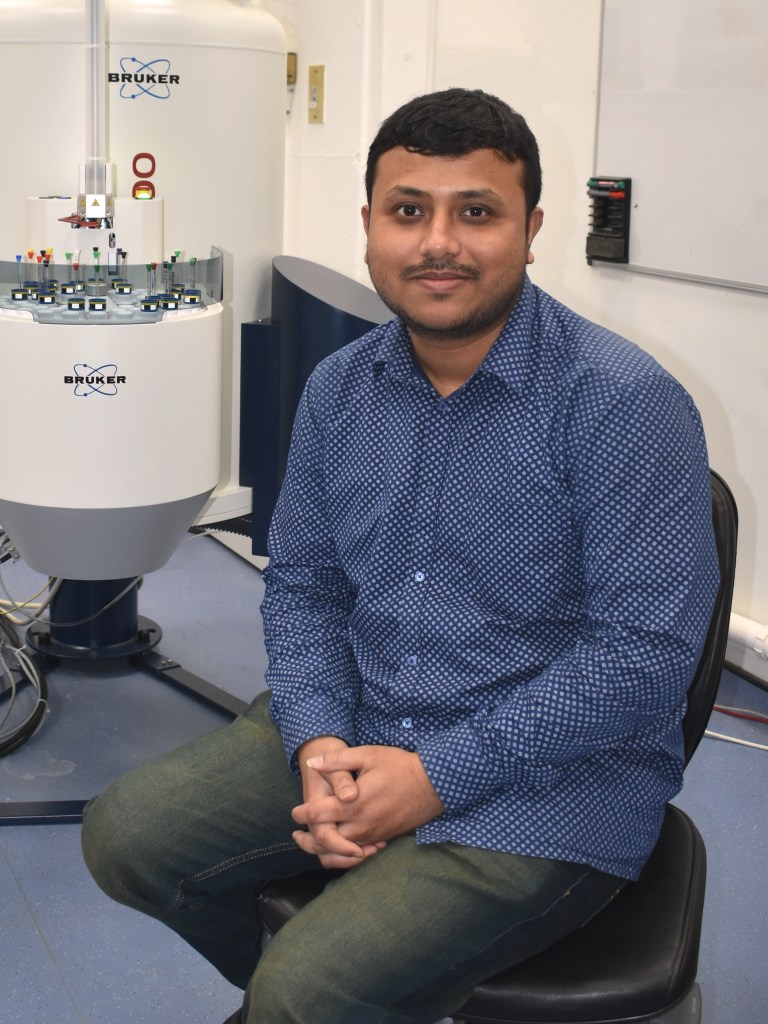
Dipankar pursued his B.Sc. (Chemistry) from Jadavpur University and M.Sc. (Chemistry) from IIT Kanpur, India. He moved to the University of Iceland for doctoral studies in Supramolecular Chemistry and obtained Ph.D. in 2020. During his Ph.D., he has worked on low molecular weight gels, metallogels, metal complexes, chirality, catalysis, and anti-bacterial activities. He is trained in X-ray crystallography and has expertise in solving small molecule crystal structures. He continued working as a postdoctoral researcher at the University of Iceland before moving to University of Glasgow in 2022. Now he is working on cross-linking peptide-based gelators to prepare new types of fabrics.
Past
Libby Marshall
Libby graduated with a First Class MSc degree in Chemistry with Medicinal Chemistry from the University of Glasgow in 2019. During her undergraduate degree she participated in a summer scholarship in the Goodyear group within the GlazGo Discovery Centre investigating the potential role of long non-coding RNA in the human immune response. She also completed a 14-month industrial placement in DIAGEO’s Packaging Design and Technology Team working with pressure-sensitive labels. She completed her Masters project with the Adams group investigating the gelation properties of NSAID-peptide conjugates. She rejoined the Adams group in 2019 for her PhD (funded by the Leverhulme Trust) where she investigated the use of multicomponent systems as a means of controlling the properties of peptide-based supramolecular systems. She received the Vernon Harrision Award from the British Society or Rheology, recognizing her PhD thesis for its excellence, creativity and novelty in the area of rheology. After completing her PhD in 2023, she assumed a position as a post-doctoral researcher in the Adams group in partnership with Sonichem working with their lignin products. The aim of her project is to characterize and functionalise the lignin extracted by Sonichem’s novel process, in order to utilize the lignin for applications such as antibacterial and UV-resistant packaging and as a starting material for the production of further specialized materials.
Alex Loch
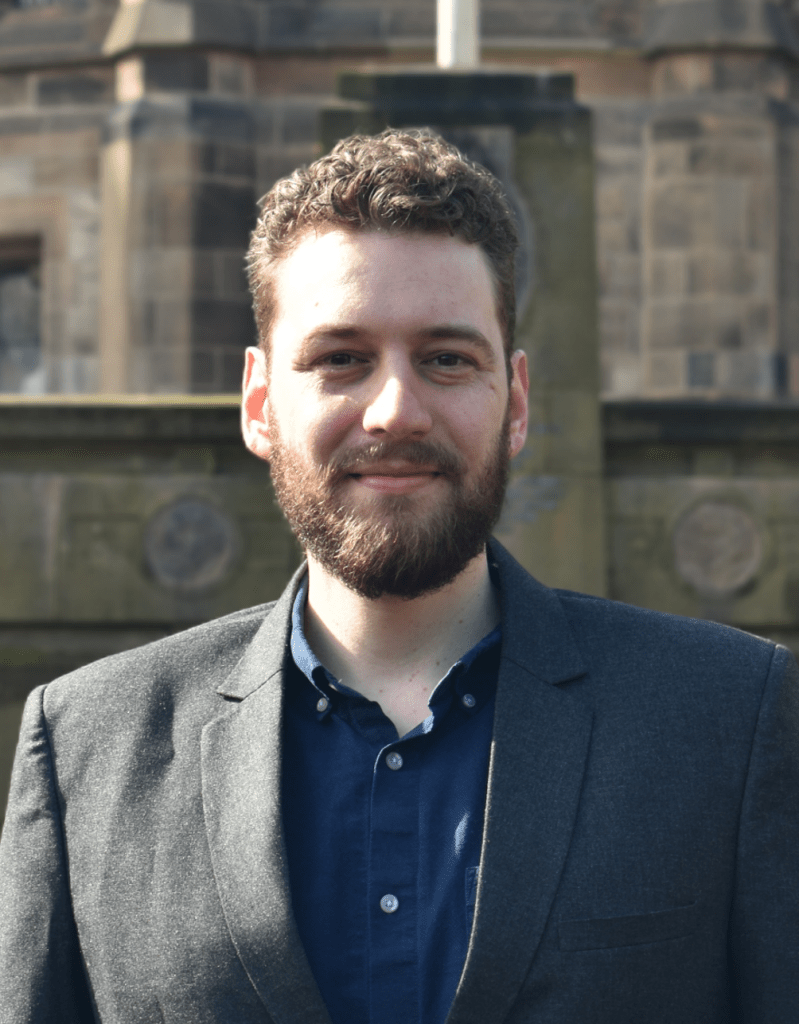
I completed a dual bachelor’s degree in Information Technology and Science (with a major in Chemistry) at the University of Queensland (UQ), Australia, followed by an honours degree in Chemistry, where I studied the use of poly(dendrimers) for the fluorescence-based detection of explosive vapours. I then undertook my PhD at the Centre for Organic Photonics & Electronics at UQ, investigating the use of luminescent materials for the rapid and sensitive vapour detection of low-volatility illicit street drugs. In mid-2022, I joined the Adams and Skabara groups, working on the Hetero-print project for heterogeneous transfer-printing and manufacturing at the University of Glasgow. In 2024, I then moved to the Draper group, where I am currently working on electrochromic devices for applications in smart windows, wearables, sensors, and energy storage. My scientific interests include organic synthesis, organic optoelectronics, and designing custom laboratory equipment.
Santanu Panja
Santanu Panja received his M.Sc. degree with specialization in organic chemistry in 2011 from the University of Calcutta, India. After qualifying for the national eligibility test (NET) jointly conducted by UGC and CSIR, Govt. of India, successively in 2010 and 2011, he joined University of Kalyani to pursue doctoral research on supramolecular chemistry under the supervision of Prof. Kumaresh Ghosh. In 2017, he started his post-doctoral research career at the Université de Bordeaux, France until he joined the University of Glasgow under Newton International Fellowship programme in March 2018 to work with Prof. Dave J. Adams. Presently he is associated with the same group as a research associate. He is an Associate Editorial board member of Mini Reviews in Organic Chemistry (MROC) and Current Smart Materials (CSM). His research interest covers the area of supramolecular chemistry, specifically gel chemistry.
Bart Dietrich
After completing a first degree in music (jazz composition) at Berklee College of Music in Boston, Massachusetts, Bart studied chemistry at the University of East Anglia, Norwich, obtaining an MChem (1st class honours) and then a PhD in organic chemistry (Diels-Alder reactions of furan-diazenes). After a couple of postdocs at the UEA (synthesis of phthalocyanines then duocarmycin-analogues), he worked at Key Organics Ltd (Camelford, Cornwall) for over four years, synthesizing small heterocyclic building blocks for the agrochemical and pharmaceutical industries, as well as being part of a long-term in-house drug-discovery project which culminated in a patent. Following his employment with Key Organics, Bart moved to the University of Liverpool to work for Prof Dave Adams, initially on an industry-sponsored project into infrared polymerisation initiators. Following a move to the University of Glasgow, Bart still works for Prof Dave Adams, mainly on the synthesis of small-molecule gelators and designing and building analytical instrumentation as required in the group.
Kate McAulay (2018-2019)
Reza Saberi Moghaddam
Tom Mitra (joint with A. Cooper, 2015- date)
Emily Draper (2015-2017)
Jaclyn Raeburn (2015-2015)
Laura Mears (2015-2018)
Ana Castilla-Manjon (2015-2016)
Michael Barrow (joint with Professor M. Rosseinsky, 2013-2017)
Alexandros Katsoulidis (joint with Professor M. Rosseinsky, 2012-2016)
Pierre Chambon (2009-2010)
Lin Chen (2009-2012)
 Dave Adams Lab